

The White HouseLimerickEst. 1812
Our Story · a long read
Two centuries of talk on one corner.
The house on the corner of O’Connell Street and Glentworth Street has stood since about 1810; the mirror over the fire says 1812. This is what we know about it, where we found it, and what we’re still looking for.
Eight chapters · about twelve minutes · the dates and the sources at the end
1812
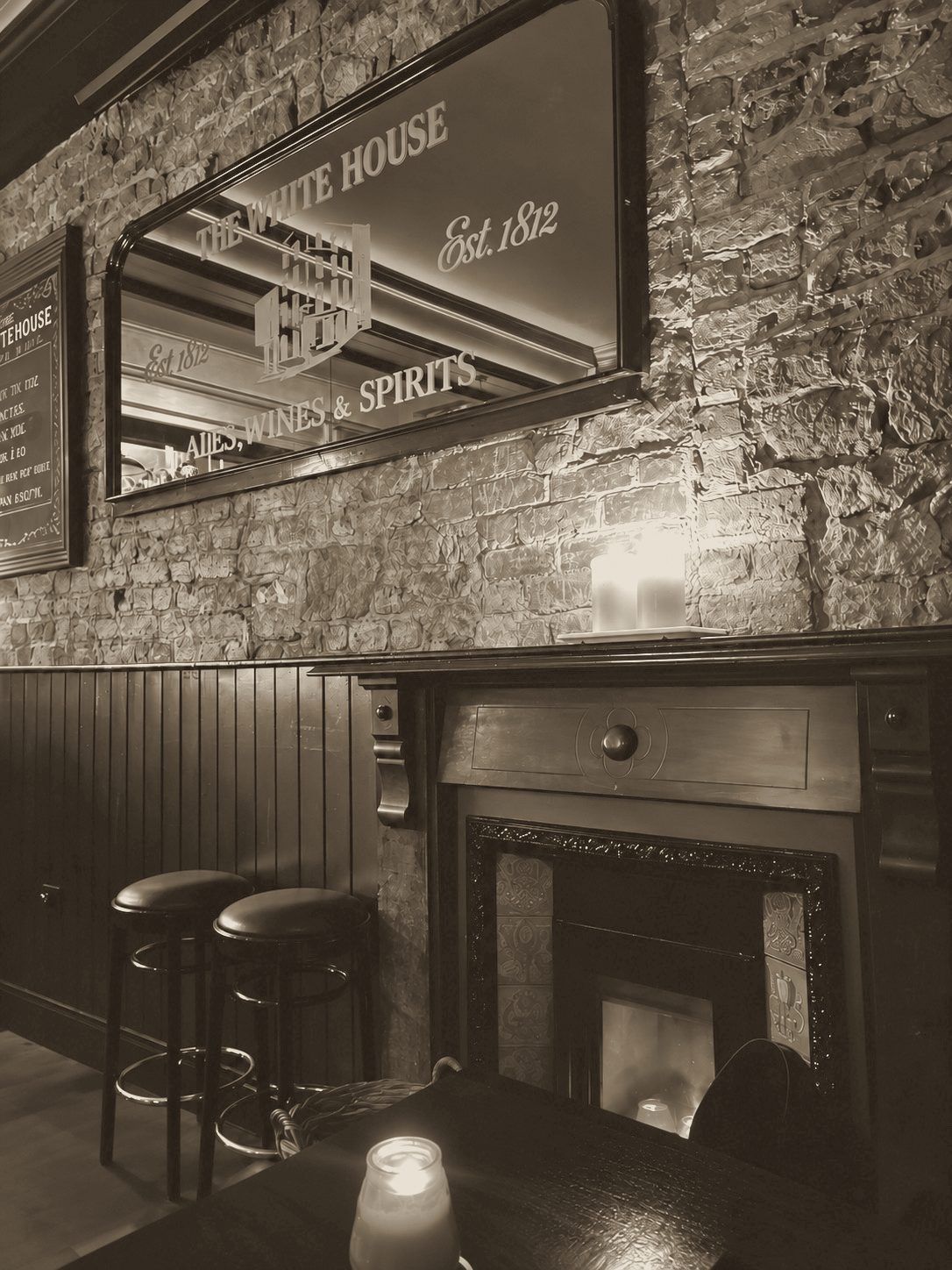
A date on the mirror
The year is in gilt on the old mirror over the fire: The White House, Est. 1812. The house itself agrees, near enough. Ireland’s national inventory of historic buildings dates it to about 1810: an end-of-terrace, red-brick townhouse, four storeys over a basement, built to face both streets at once.6
Most of what you see from the street came later. The shopfront, with Doric pilasters on both sides of the corner and a “crazy” tiled base beneath them, is late Victorian. So, the same survey says, is the pub interior, which it calls largely intact and “of some significance”.6 Look up at the Glentworth Street wall: the iron gantry crane there may be original, put up for hoisting goods to and from the basement.6
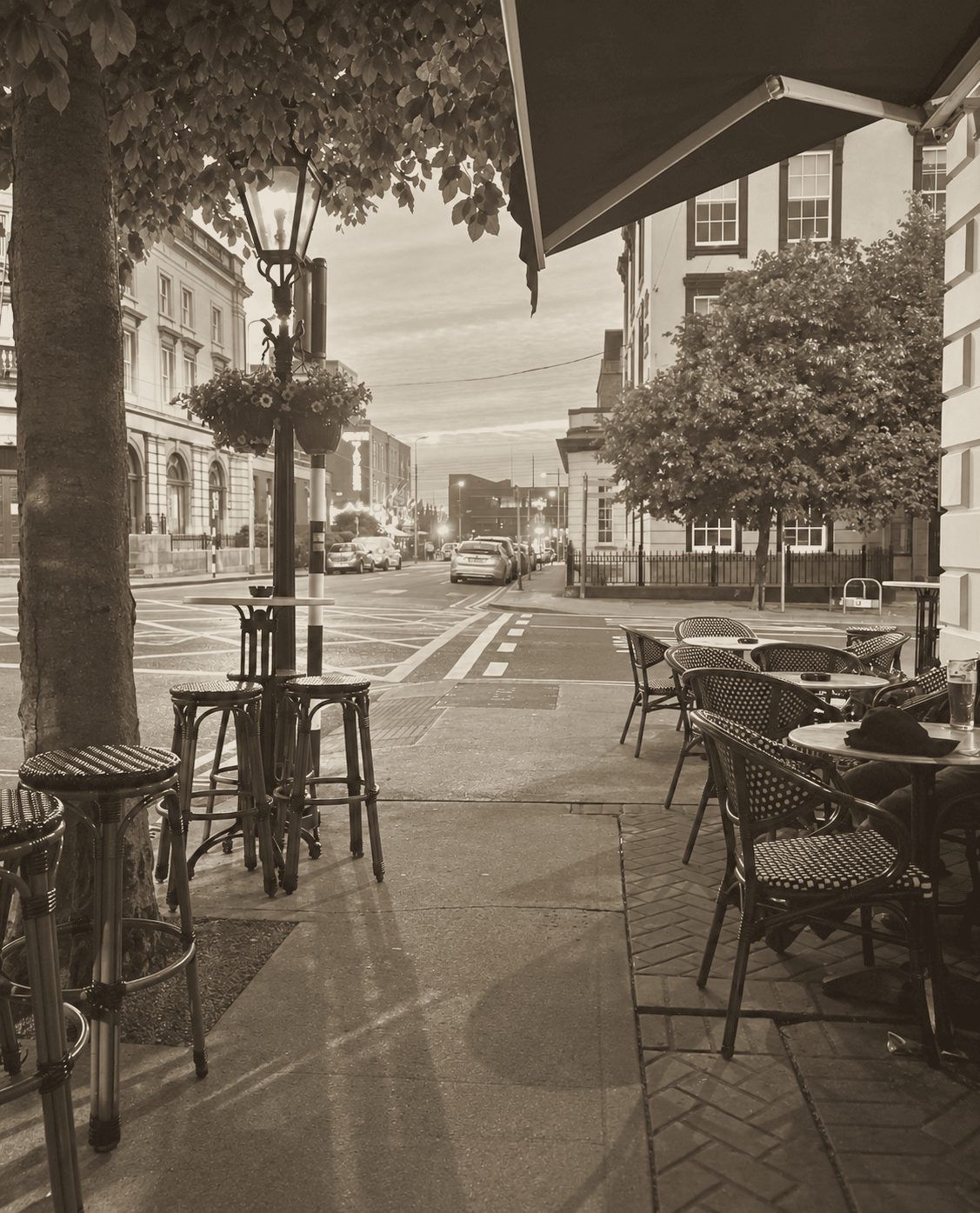
The house is on the city’s Record of Protected Structures. So is the cast-iron lamp standard outside the door, which has been lighting the corner since about 1880.7
Who kept it, and where the name came from, is chapter three.
The corner
George’s Street, at Glentworth
The bar stands where Glentworth Street meets O’Connell Street, which is the kind of address that gets you found. Two streets, two lots of weather, and a corner that people have been arranging to meet at for a very long time.
In 1812 it was George’s Street, and the town around it was new. In the late 1760s Edmond Sexton Pery began building on his land beside the river, south of the old city, to a grid plan attributed to the engineer Davis Ducart. Newtown Pery took sixty years to fill in.8 When this house went up, the grid was still being built around it.
The side street is family too. Glentworth Street is named for William Cecil Pery, Edmond’s brother, the Bishop of Limerick, who was made Baron Glentworth in 1790.89 George’s Street became O’Connell Street, after Daniel O’Connell, in 1913.10
The building carries writing, and we want to photograph all of it properly before we say more than this. There’s a plaque to the poet Desmond O’Grady on the O’Connell Street side, unveiled by President Michael D Higgins on 24 February 2015.514 There’s an inscribed stone at the corner itself, jutting out into Glentworth Street, carrying a limerick about the limerick, a form the verse calls “furtive and mean”.5 On this corner, of all corners. And when the heritage survey came in 2005 there was a third, older than both and pure advertising: a wall plaque, about as old as the shopfront, reading Guinness’s XX Stout.6
A corner that people have been arranging to meet at for a very long time.
No. 52 George’s Streetlater O’Connell Street
| Year | Name | Trade |
|---|---|---|
| 1877 | Patrick Hayes | Grocer & spirit dealer |
| 1886 | Patrick Hayes | Vintner |
| 1891 | Moses Caffrey | Grocer |
| 1912 | James Gleeson | Grocer & spirit dealer |
| 1918 | James Gleeson | Wine & spirit merchant |
| 1976 | Eamonn Gleeson | Publican & vintner |
The trade
Who kept the house
Limerick’s old trade directories list who lived and traded where, street by street. Read them for No. 52 and you meet the people who kept the house.11
In Victorian Limerick it was a grocer’s and spirit merchant’s, the kind of corner house that sold you tea, sugar and a glass of something across the same counter. Patrick Hayes, grocer and vintner, kept it through the 1870s and 1880s; Moses Caffrey was here in 1891.11 By 1912 the house is James Gleeson’s, “52 O’Connell Street and 1 Glentworth Street”, and a Gleeson is still behind the bar in the directory of 1976.11
And the name? The story told for years is that it came from W. H. White & Co., the firm that first opened the bar.512 The directories have William Henry White, wine merchant, on George’s Street from the 1840s, and later W. H. White & Co. at No. 53: the house just across Glentworth Street.611 How their name crossed the street, nobody has written down.
Gleeson’s
The man behind the bar
For most of the twentieth century this was Gleeson’s. James Gleeson is in the directories from 1912;11 by the family’s own account they bought the bar in the 1920s and kept it until the 1990s.12 In 2005 the fascia still said so, in incised letters behind glass: James Gleeson.6
By the 1950s it was Eamonn Gleeson’s. He owned it, and by one account he was also its only barman, a man with a real interest in the arts and in history.13 He’s remembered as an eccentric who wired the bar stools together so nobody could move them, and as a publican who made room for people nobody else would.12
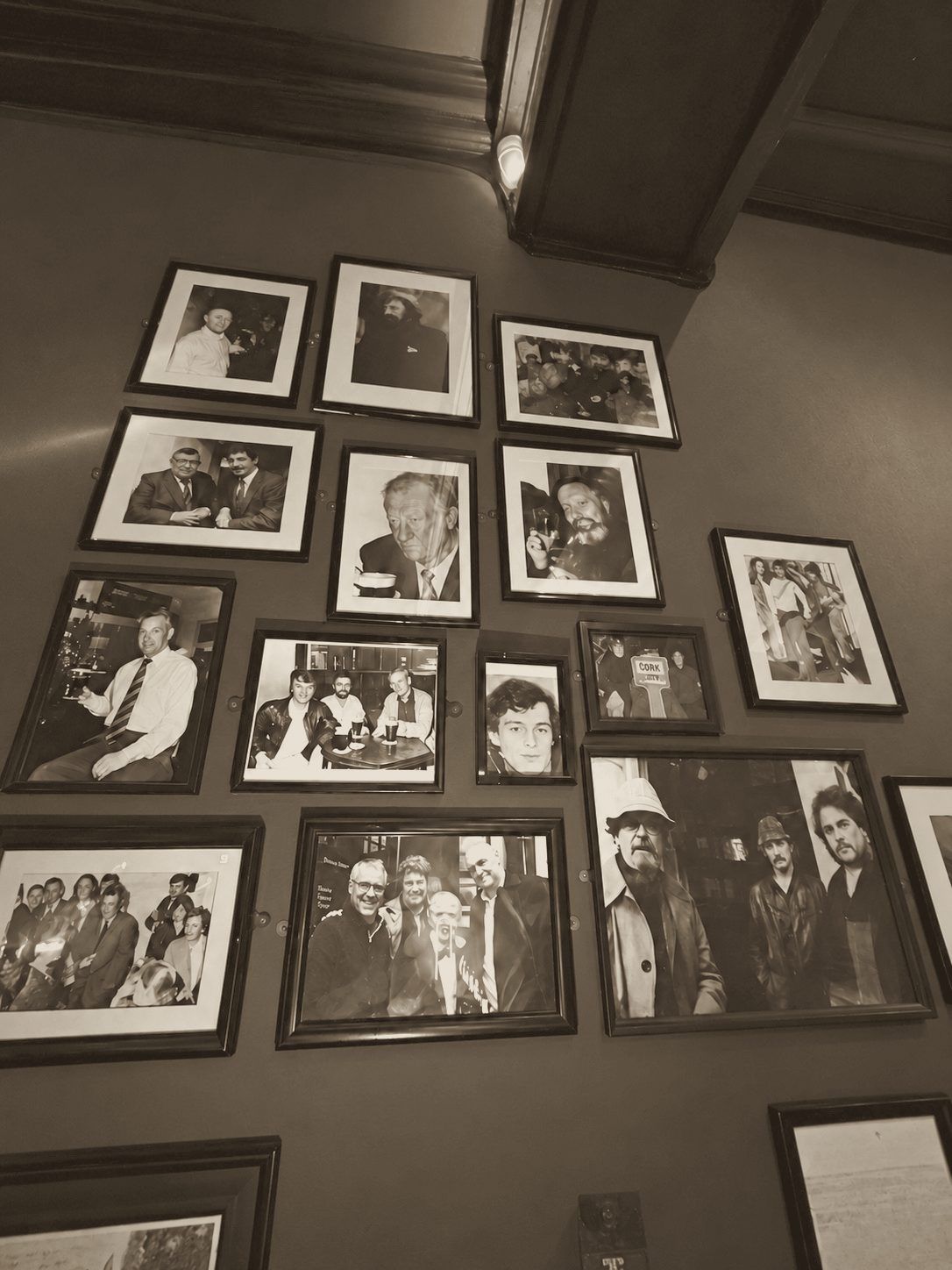
For a long time a picture of Ezra Pound hung on the wall. In the summer of 1975 Robert Graves, whose grandfather had been Bishop of Limerick, was expected in the city. Graves disliked Pound, so the story goes, and Gleeson took the picture down rather than offend him. The poet John Liddy made a poem of it, Pound Devalued in White House, and it hangs on the wall beside his photograph, with Gleeson’s own picture not far off.1216
It was a pub for talk. For years it kept no television, and gave its nights to poetry and acoustic music instead.512 Bankers, lawyers, artists and musicians drank side by side; Jack Charlton once had a pint of Guinness here, and it was a favourite of the late TD Jim Kemmy.12
He wired the bar stools together so nobody could move them.
The poets
Poets before the microphone
In 1954 a young Limerick poet, Desmond O’Grady, fell in with the Limerick Poetry Circle, a group who met every week to read poems and argue about them. It was through the Circle, and by one account in this very bar, that he first read Eliot and Pound.15
The Circle wanted a wider audience, and O’Grady wanted a room. He suggested the White House, the “umbilical centre of the city”, and Kitty Bredin of the Circle introduced him to Eamonn Gleeson.13 His idea was simple: invite anyone in Limerick writing poems to read them over a drink, and poets from the rest of Ireland and abroad to read theirs. Gleeson agreed.13
That would bring their world to ours.
Through the winter of 1954 and into the spring of 1955, O’Grady read his poems here to a curious public. Many of them went into his first book, Chords and Orchestrations.13 Sixty years later the President of Ireland came to the corner to unveil a plaque to him, and said it plainly: O’Grady gave his first reading at the White House.14 Seamus Heaney had called him one of the senior figures in Irish literary life.14
A young man called Barney Sheehan was drinking here by the fifties, too.12 Hold that thought.
The Wednesdays
weeks and more, one after another
April 2003 to July 2016
The Wednesdays
An open mic, every week, for thirteen years
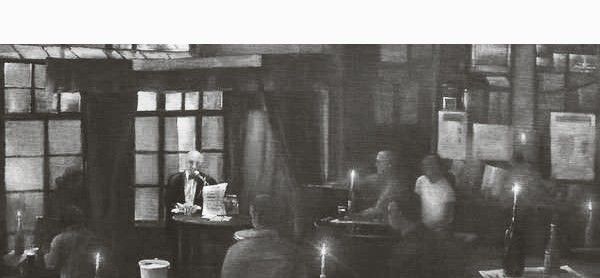
In April 2003 Barney Sheehan started an open mic for poetry here, every Wednesday night.1 Desmond O’Grady was its first guest.14 The idea was simple and, at the time, unusual: anyone could walk in off the street and read their own work. Then a published poet would read, and the newer voices got to meet the seasoned ones over a drink.3
It kept going. The poets marked their five-hundredth consecutive week in June 2013,2 and by one count their six-hundredth night in 2015.5 They printed their own journal, Revival: twenty-five issues from October 2006.17 Poets came from all over the world to read in a pub on a Limerick corner.15
Anyone could walk in off the street and read.
Dominic Taylor, a founding member of the Limerick Writers Centre, has called it the first modern weekly open-mic reading in a pub in Ireland.1 That’s his claim, and a generous one. We’re not about to argue with him.
The Wednesdays ran here for more than 640 weeks. In July 2016 the bar changed hands, and the last night moved a few doors down to Tom and Jerry’s; nothing, the poets said, could stop the poetry.18 In April 2022, for one night during April is Poetry Month, the White House Poetry Revival came back and paid tribute to the late Limerick poet Mark Whelan.1
In memory of
Barney Sheehan
1934 – 2018
He started the Wednesday open mic, April 2003.
Barney
The late Barney Sheehan
Barney Sheehan was born in Nenagh in 1934 and came to Limerick as a child.3 He’d been drinking at the White House since the 1950s, and liked it for the reason a lot of people did: no television, no racket, room to talk.12
He started the Wednesday open mic here in April 2003,1 compered it for years,12 and made a room where anyone with a poem was welcome to stand up and read it.3
He died in April 2018, aged 84.3 The tributes came from right across the city’s literary life. His friends gathered at his old haunt to remember him, and the Limerick Leader called him what a lot of people already did: a Limerick legend.4
Poets’ Corner is where we keep his night: the record of it, the poems we have permission to print, and, we hope, the readings themselves.
Today
Still writing
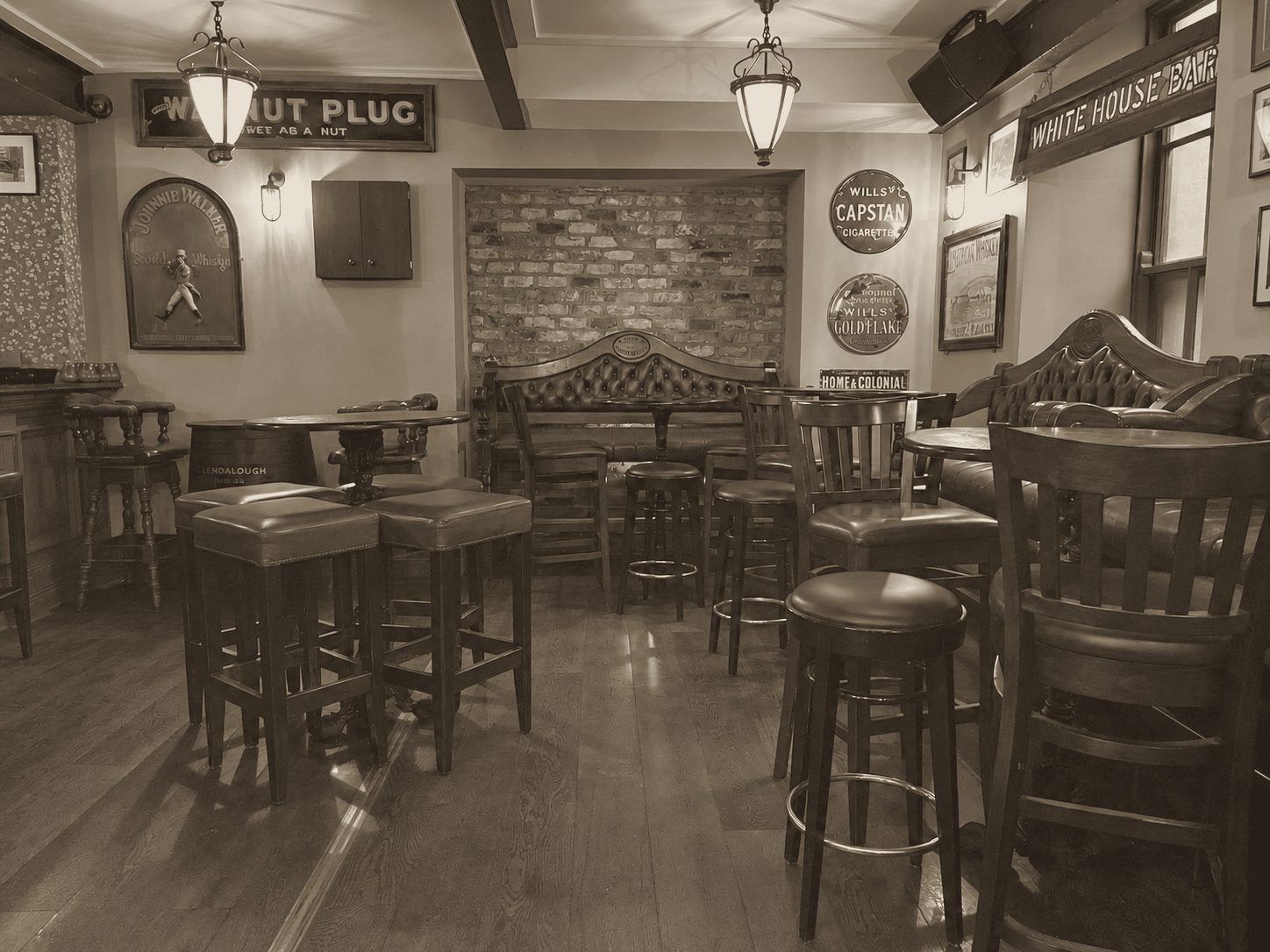
Two centuries on, the fire still gets lit, and there’s music every night. Monday and Tuesday are the trad sessions. Wednesday to Friday, local musicians. On Saturday a DJ turns it into a late bar.
And the poets came back. Since August 2023 the Limerick Writers Centre and Lime Square Poets have run a reading and open mic here on the first Wednesday of every month,19 and in 2026 the First Wednesday Series opened the city’s April is Poetry Month.20
The White House isn’t preserved. It’s in use. Come in and hear it.
At a glance
The house, in dates
Everything above, in order. The numbers are the sources.
- Late 1760sEdmond Sexton Pery starts building Newtown Pery on his land south of the old city, to a grid plan.8
- c. 1810The house goes up on the corner of George’s Street and Glentworth Street.6
- 1812The date on the mirror.
- c. 1880The cast-iron lamp standard goes up outside.7
- 1886Patrick Hayes, grocer and vintner, at No. 52.11
- Late 1800sThe shopfront and the pub interior that survive today.6
- 1912James Gleeson, grocer and wine and spirit merchant.11
- 1913George’s Street becomes O’Connell Street.10
- 1954Desmond O’Grady’s first readings, with Eamonn Gleeson’s blessing.13
- 1975Robert Graves is expected; Ezra Pound comes off the wall.16
- 1990sThe Gleesons sell.12
- 2003Barney Sheehan’s Wednesday open mic begins in April. Desmond O’Grady is the first guest.114
- 2006Revival, the White House Poets’ journal, publishes its first issue in October.17
- 2012Two hundred years on the mirror, marked with a party on 27 October.12
- 2013The five-hundredth consecutive Wednesday, in June.2
- 2015President Higgins unveils the plaque to Desmond O’Grady, 24 February.14
- 2016After more than 640 Wednesdays, the bar changes hands in July.18
- 2018Barney Sheehan dies in April, aged 84.3
- 2022A one-night White House Poetry Revival, in April.1
- 2023The First Wednesday readings begin in August.19
- 2026Still writing.